
How to Make: Mushroom Sage Risotto with Chives
One of my absolute favorite risotto recipes.
Today I’m sharing the third recipe in my risotto series. Once again, it’s based on the technique of my Simple Classic Risotto from week 1. If you missed that newsletter, you can give it a read here! Even with the addition of mushrooms and a special herb steeping step, this method is incredibly simple. It’s a hug in a bowl.
Earlier this month, my slice of New England had 60-degree weather. Shortly after, we had another Nor’easter. While I know academically that the warm weather was the “wrong” weather and the slushy cold wind of a winter storm is correct for, well, winter… I couldn’t help but get caught up in the fresh breeze, blue skies, and lightweight jackets of that misplaced, rogue spring day. It was an enchanting tease, a reminder of fresh leaves and bare toes crinkling in the grass.
Funnily enough, the promise of an 8-inch snow dump made the chilly departure of false spring acceptable. I will never not love the still magic of falling snow, and always try to steal a moment to stroll about, greeting the flakes and the drifts. The squeaky conversation between snow boots and freshly fallen snow is pure joy. If the weather god was going to tease us with a taste of spring in early February, the least she could do is follow it up with a sparkly snow storm!
Rudely, though, our snow storm turned into slush, wind, and mud. No beautiful blanket of snow, no sparkling frosted trees. Nuthin. So naturally, I needed consolation. Lucky for me, I already had this cozy mushroom-sage risotto recipe on the docket! If you’re also feeling martyred by the drudgery that is dull, grey winter, then may I recommend we eat our feelings together?
(If you want to cut straight to the chase, hop right over to the recipe post: Mushroom Sage Risotto with Chives. Otherwise read on and take a peek at the cute recipe video I made, plus a bonus 30 Minute Mushroom Vegetable Broth at the end of this newsletter!)
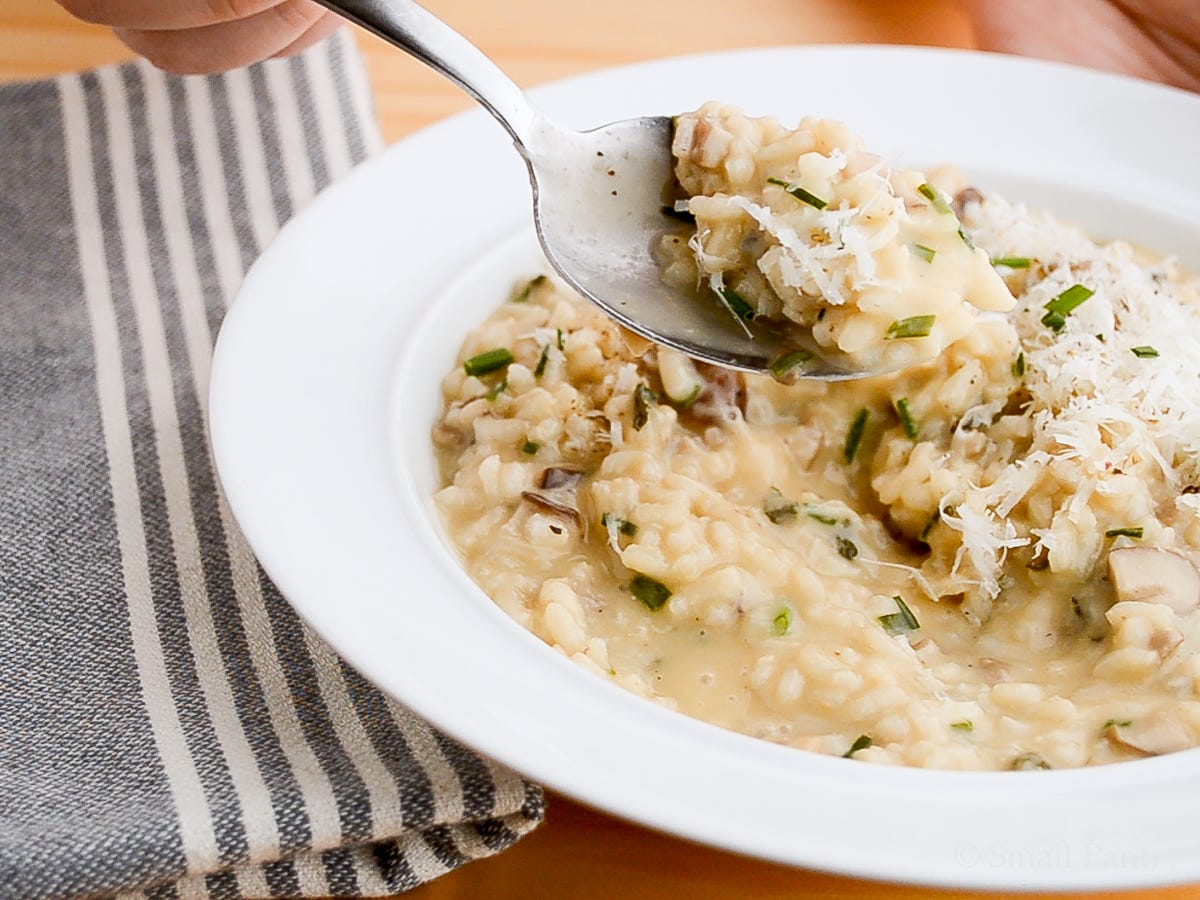
It almost feels strategically wrong to share my favorite risotto recipe near the beginning of this series. Shouldn’t it be an excited Ta-Da! at the end? Whatever. It’s a hug, and who doesn’t need a hug in February?
As mentioned at the top, this recipe is based on my base risotto technique. It takes a bit more time due to chopping up the mushrooms and herbs, but there are no extra steps once you hit the stove.
The flavors of this risotto are so simple, it almost feels like there’s nothing to say. Mushrooms are hearty and savory, sage is quintessential comfort food, and chives are just enough cheerful onion flavor to make it a party.
Because of this simplicity, there are two key points that really make the final dish sing. The first is in the steeping of the sage. The second is choosing your mushrooms.
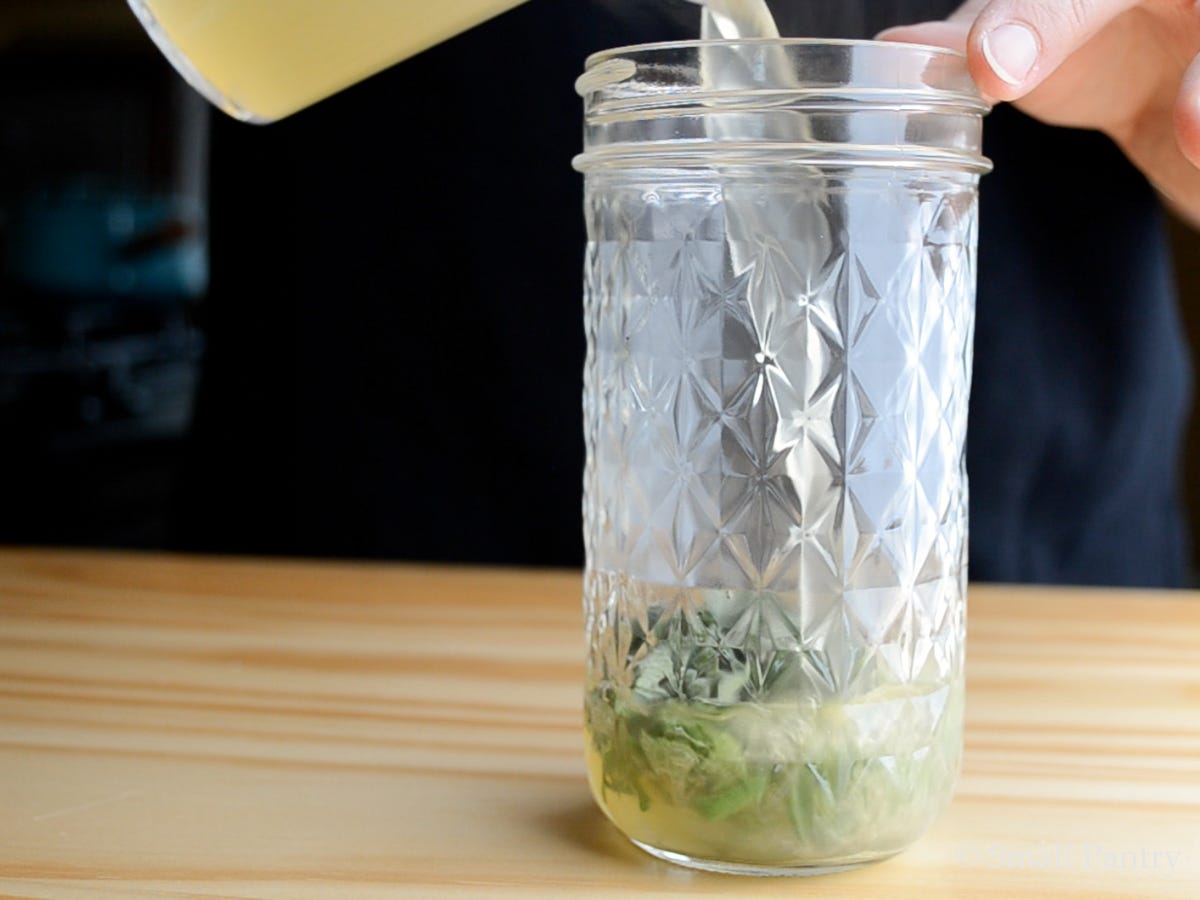
Steeping your sage:
The very first step of this recipe is to make a sage + broth tea. Steeping fresh sage in hot broth infuses the broth with a beautiful, concentrated sage aroma. Remember that “adjustment phase” built into the base risotto technique? Rather than an extra splash of plain broth, we add this sage tea. This achieves two goals:
The sage stays vibrant. We could add the fresh sage at the beginning to infuse the pot as it bubbles along, but that’s about 15 minutes of a pretty rigorous cooking temp. As with many fresh herbs, extended high temps affect the flavor molecules and can dampen and muddy their character. Sage is generally a pretty sturdy herb, but in a recipe this simple I really wanted it to SING, not just come along for a ride. So, we treat it a bit more gently.
The resulting “tea” is directly absorbed into the rice. By infusing the broth with the sage’s aroma, we create another avenue for the sage flavor to permeate the whole dish without extended cooking. The broth soaks into the rice and becomes part of the velvety, cheesy sauce. It carries the concentrated sage flavor throughout the entire dish, not just where a shred of sage happens to land.
Choosing your mushrooms:
While I love mushrooms in general, I don’t love all mushrooms. There is a delightful variety of tastes and textures in the fungi world, which means there are plenty of opportunities to fall in love as well as plenty of opportunities to be put off. For example, 99% of the time I find the much-adored porcini mushroom to smell precisely of dog kibble, especially when dried. Not for me.
A quick side note: What if you don’t like mushrooms...?
First, that’s okay! I have only harsh words for folks who try to “convert” (aka bully) people into liking things (I get steamed up about these people so fast, and could do a whole separate newsletter rant about how inappropriate it is…). I’m not going to tell you that you’re wrong for disliking something.
Second, thanks for reading this far! Seriously. I wouldn’t have blamed you for seeing “mushroom” in the subject line and thinking, “eh not for me, I’ll read the next one.” I appreciate that you’re reading my chatter anyway. ♥
Third, do you want to like mushrooms? Sometimes we dislike something but wish we liked it. I trained myself to like mushrooms, fresh tomatoes, and fishy fish, for example. I’m very stubborn! If you’re on a mission to like mushrooms, this might be a good, low-effort recipe to try. And this brings me back to…choosing your mushrooms!
I am on okay terms with button, cremini, and portobello mushrooms (which are all actually different maturities of the same mushroom species). But I don’t love them. I find their flavor to be pretty muddy (literal mud-muddy) and their texture can be a bit spongy and wet. All of these will work in this recipe, however, so if you like them, use them!
Shiitake are my usual go-to basic mushroom, and I often reach for them when a recipe calls for button/cremini. They are sometimes a bit more expensive, but readily available at grocery stores. I like their firmer texture—more springy less mushy— and I like the deeper, more savory-meaty flavor. You can also use rehydrated dried shiitake, which can be quite cost-effective depending on your source!
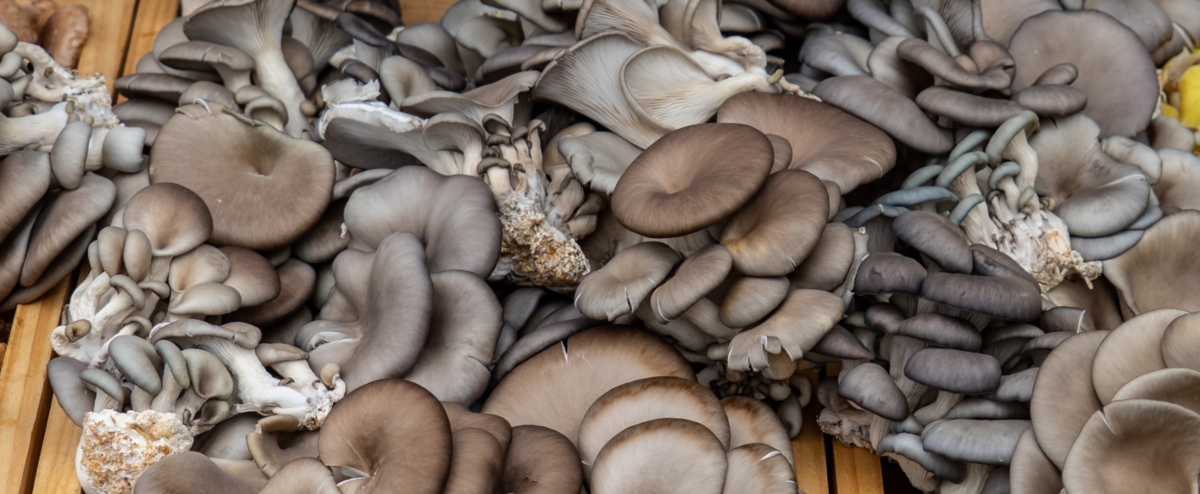
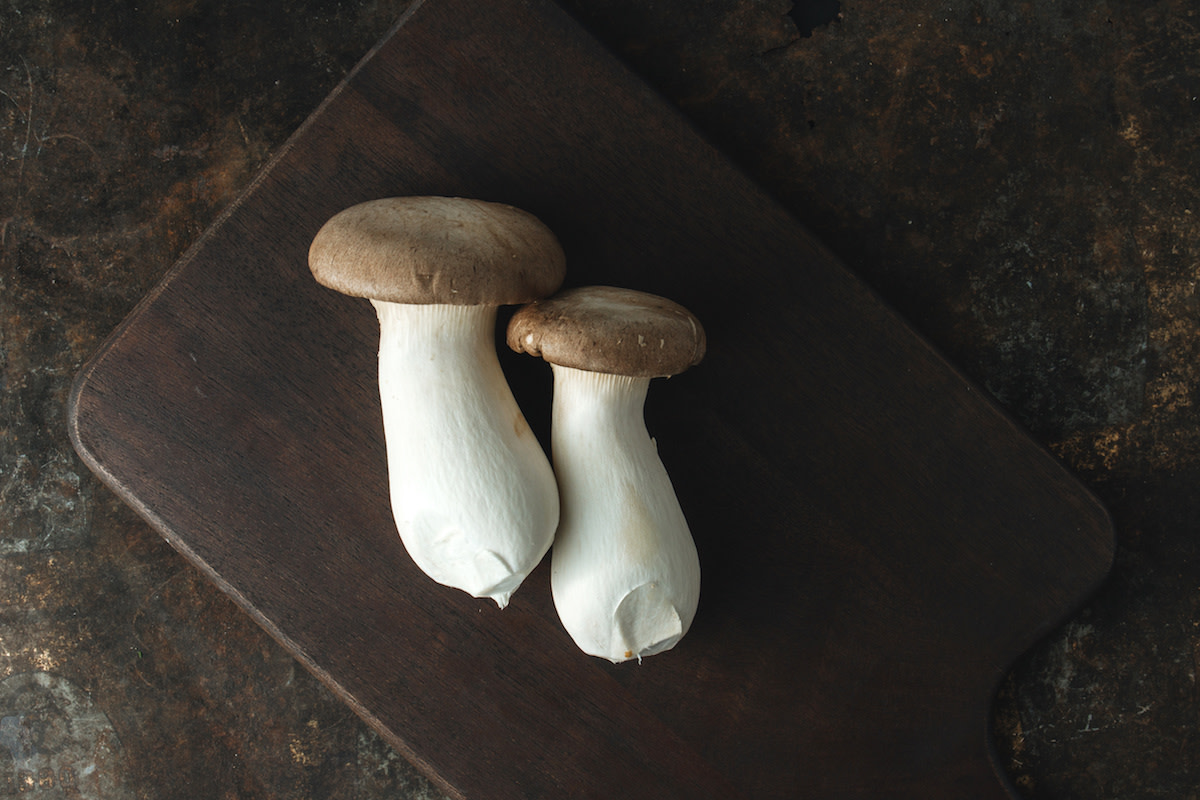
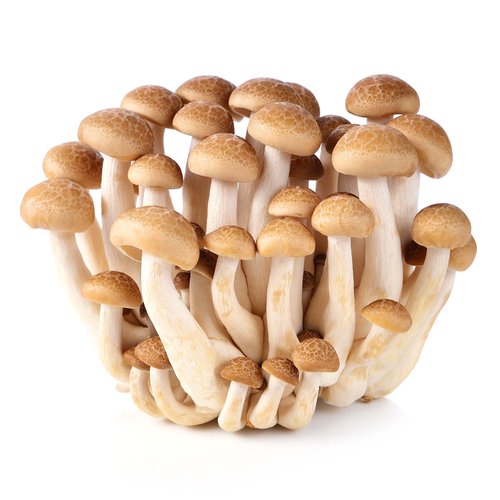
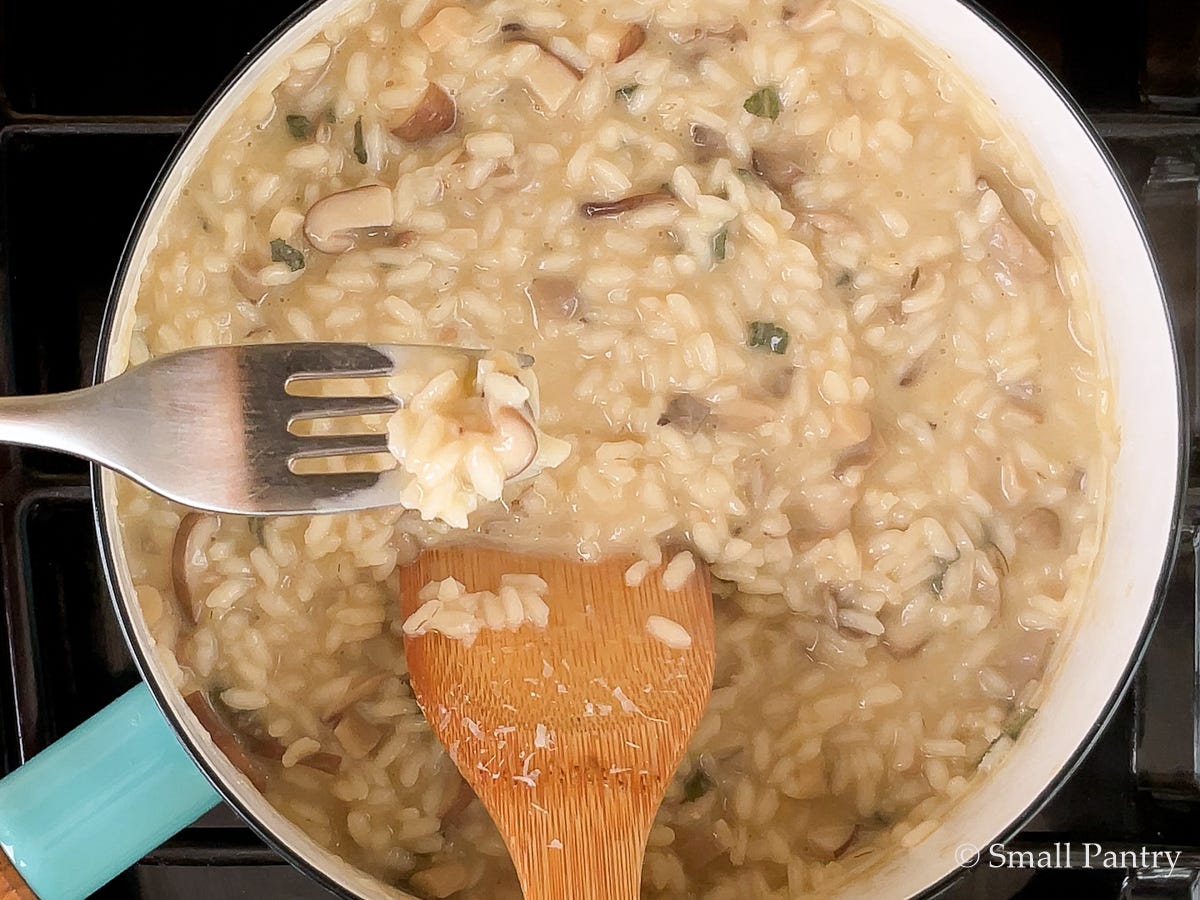
When available, I also love using oyster, king trumpet, shimeji/beech, and maitake/hen-of-the-woods mushrooms. I usually think king trumpet and shimeji have the lightest flavor, followed by oyster, then maitake. In the photo below I used a blend of shiitake, button, and oyster mushrooms. When I have shimeji mushrooms I like to leave the smallest ones whole. They’re so cute.

Ready to cook? Hop over to the recipe here: Easy Mushroom Sage Risotto with Chives on Small-Pantry.com
This mushroom risotto is, in my mind, a season-straddling recipe. It’s cozy enough for a cold, dark winter meal, rich with cheese and cozy aromas. But the savory coziness of mushrooms always feels more alive and energizing than the stereotypical hearty winter fare. A bowl of this risotto offers comfort in the darkest days of the year, while still welcoming the tentative warming of a March drizzle. Maybe because so many tasty mushrooms are in season in spring? When spring finally springs, I plan to hunt down some morels and make this recipe again… Maybe with an extra sweater so I can crack open the window open and let in the damp, green smell of new growth.
I made another video!
Filming and editing videos is a lot of work, but it’s been fun to learn a new set of skills. I’d love it if you give it a watch and let me know what you think! The nice thing about Substack is that it allows you to leave comments directly below the newsletter, but feel free to drop me a note directly on the YouTube page, below the recipe on Small-Pantry.com, or on Instagram! I’d love to hear your thoughts, and do let me know if you make this risotto recipe (or any of the others!).
Thanks for reading, fellow rice lover! Next week we’re staying cozy with the first non-vegetarian recipe, because I dunno about you but I need a second comforting, cozy, carby consolation prize for agreeing to deal with March (aka Mud Season). Get ready to hunker down with a bowl of sausage risotto with baby greens!
Quick and Easy Mushroom Broth
A simple and flavorful mushroom broth. Chopping the veggies and mushrooms into small-ish pieces allows for increased surface area, infusing the water with deliciousness much faster than leaving the veg in bigger chunks. If you budget about 10 minutes for prep, then this broth is ready to use in about 30 minutes! As written, this is a lovely, delicate broth. For bigger mushroom aromas, double the dried mushrooms. Or, if using in a recipe that calls for fresh shiitakes, save the stems and add them to this broth for an extra boost.
Ingredients
1/2 ounce dried mushrooms, such as shiitake
3 large celery stalks, chopped
2 medium garlic cloves, smashed and peeled
1 large yellow onion, chopped
1 medium tomato, roughly chopped
5 cups water
1 teaspoon salt, optional
Method
Step 1
Combine all ingredients in a large saucepan, ideally at least 3 quarts. Set over high heat and bring to a boil. Partially cover the pot, then reduce the heat to medium-high. Cook for 20 minutes, adjusting the heat to maintain a lively simmer. (Partially covering the pot allows for some evaporation, but not too much.)
Step 2
Pour the broth through a fine mesh strainer into a large bowl. Press the solids gently to remove as much liquid as possible, then discard the solids (compost if you can!). You should have about 1 quart of broth.
Note: Salt is optional, but I like to use it. Generally you’re not supposed to salt your broths and stocks, because well-seasoned stocks can end up making many recipes too salty by the time they finish cooking. However, since even “low-sodium” boxed broths still have some salt, I feel it’s a better 1:1 for most recipes to start with a homemade broth that has a bit of seasoning already added.